
Editorial Policy
This policy sets our commitments to readers: material claims need a suitable source, uncertainty stays visible, commercial interests do not dictate conclusions, and authority is never manufactured through invented people or test histories.
How claims are classified
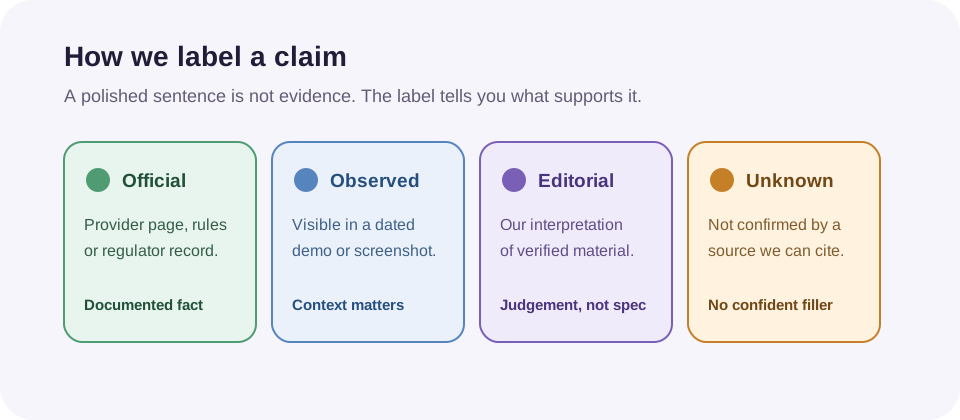
The labels control how strongly a claim is worded and what qualification must sit beside it. They do not replace human judgement or make a source permanently current.
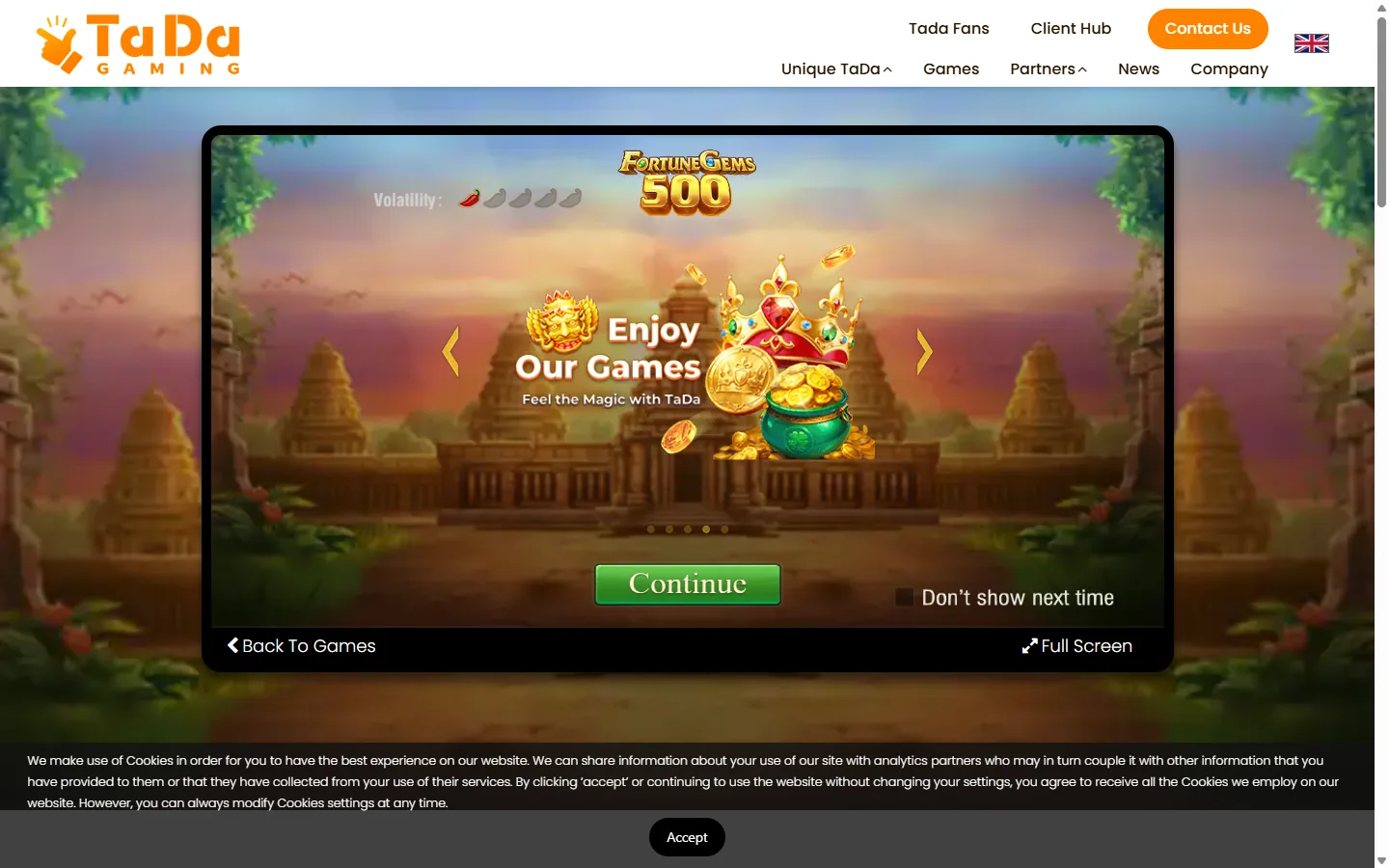
The first-party route can support provider-owned product statements when the claim stays within scope. Official status does not make it evidence for casino licensing, RTP or independent quality.
The product-page example shows why scope comes first. It can identify the game while remaining irrelevant to a casino’s legal status.
Official
A claim is called official only when it is directly supported by TaDa Gaming for product matters or by a relevant authority for its own subject. The source, scope and checked date matter. TaDa Gaming can identify Fortune Gems 500 and describe its mechanics; PAGCOR can supply Philippine responsible-gambling context. One cannot substitute for the other.
Observed
An observed statement is limited to a dated first-party interface state. The 3×3 grid, narrow fourth reel and Wild wording are visible in official demo captures. An observation cannot become an estimate of frequency, probability, RTP, typical performance or broad device support.
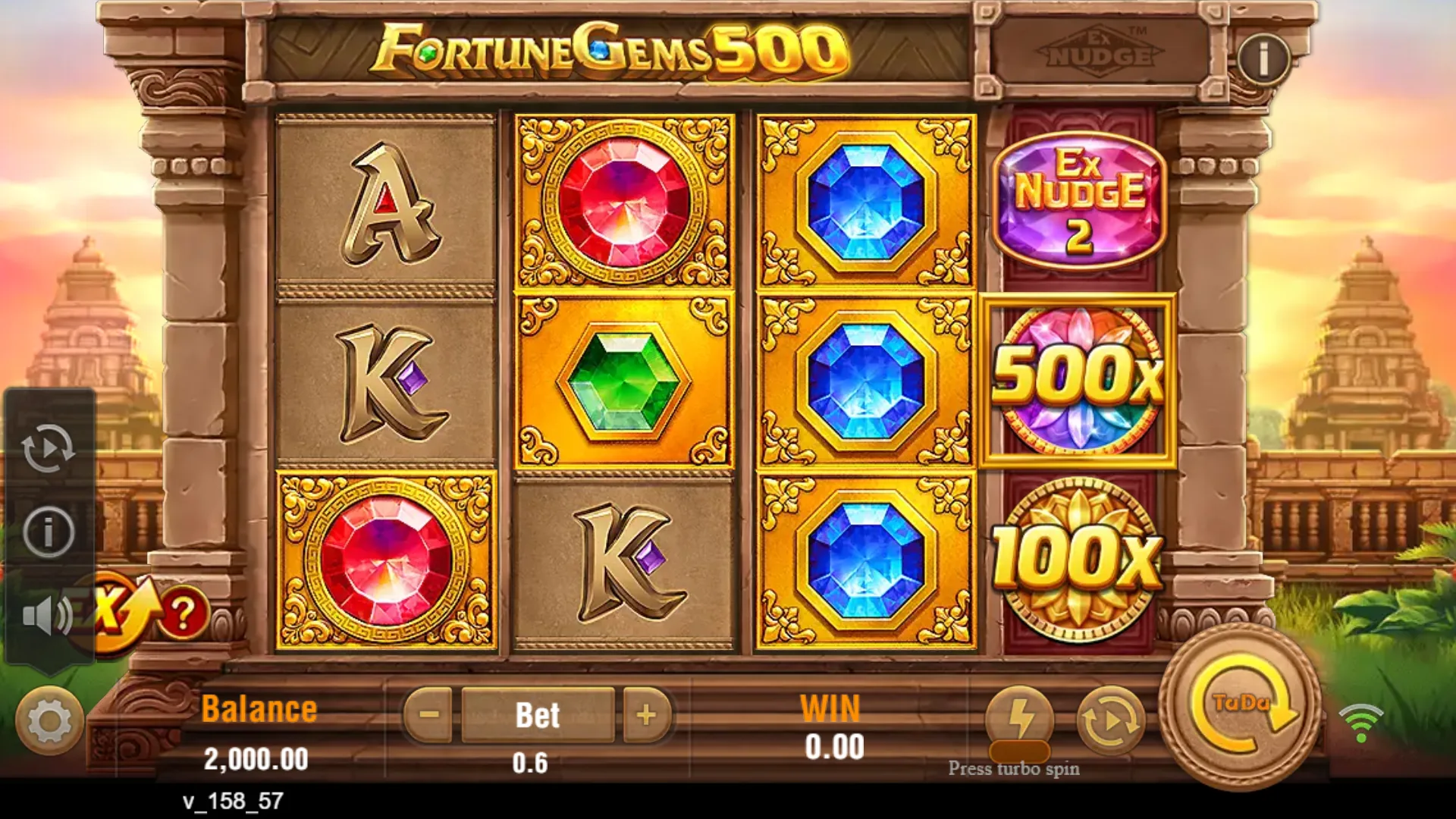
The frame supports a dated observation about visible layout and controls. It does not support probability, fairness, typical performance or all-version claims.
The full screen is published so readers can inspect the context of the observation. Its date and limits remain part of the claim.
Editorial
Editorial analysis connects supported facts to a reader decision. Explaining why 500× is not the same claim as a 12,500× total-bet maximum is analysis grounded in official figures. Advice to verify the displayed cost before enabling Extra Bet is practical interpretation. Editorial conclusions must be identifiable and must not be dressed up as provider rules.
Unknown
Unknown applies when evidence is absent, incomplete, conflicting or too weak for a firm answer. It means neither zero nor absent. RTP, Free Spins, Buy Feature and APK availability stay unknown until relevant versioned evidence is verified; repetition across unaffiliated sites adds no authority.
Source selection and verification
Primary sources first
Provider product pages, release articles and official in-game help are preferred for identity, specifications and rules. Current regulator material is preferred for regulatory and responsible-gambling context. Competitor copy, search snippets and generic slot databases may suggest a question but are not publication evidence.
Scope before authority
An authoritative source can still be wrong for the question. Provider pages do not prove operator licensing, screenshots do not prove randomness, and a regulator’s general safety page does not endorse a game. The relevant boundary sits beside the claim instead of hiding behind a broad “trusted source” label.
Numbers require units and context
Every material number must retain its meaning. The feature multiplier is up to 500×; the maximum win is 12,500× total bet; the game has five paylines; the release article is dated 6 August 2025. A percentage would require an exact source and version before being published as RTP.
Version and conflict handling
Interfaces and web pages change. A capture date is not a release date, and one game configuration may not settle every other configuration. When two suitable sources conflict, we identify which is closer to the active rule, record the unresolved difference and narrow the wording. We do not select the claim that makes the review more attractive.
Independence and commercial separation
Editorial conclusions are not for sale
A commercial relationship cannot purchase a rating, positive verdict, omission of a gap or softened risk wording. This site does not use star scores for Fortune Gems 500. Sponsored play buttons route through /go/, but they do not establish Philippine eligibility, operator identity, licensing or game availability.
Links must not distort the answer
Contextual links should help verify a claim or answer the next practical question, not merely generate clicks. Demo access must remain distinct from real-money play, and editorial copy must contain no hardcoded affiliate destination. Safety, privacy and contact pages may end without promotion.
Provider media and third-party rights
First-party screenshots are used as evidence with source, date, viewport and limitation. They are attributed to TaDa Gaming and are not presented as publication-owned game art. Competitor production assets, stock trust imagery and copied casino promotions are not acceptable substitutes.
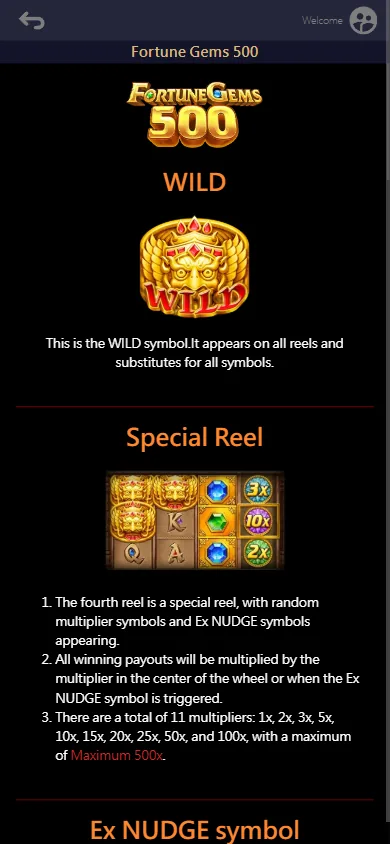
The image remains attributed first-party evidence and is labelled with its viewport and emulation status. It is not publication-owned artwork or proof of physical-device support.
The narrow rules panel demonstrates the required treatment: identify the first-party context, declare browser emulation and avoid implying ownership or device testing.
Corrections and substantive updates
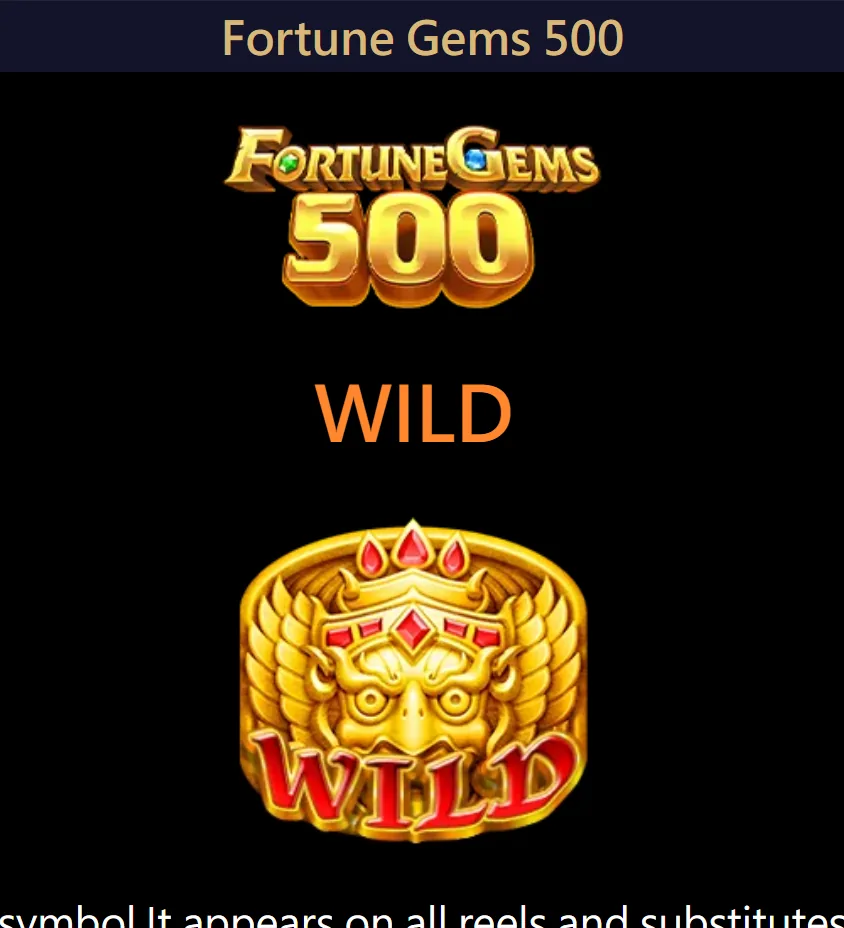
The crop identifies exact wording that can be compared during a correction review. Without its source frame, date and scope, the crop alone would be insufficient.
A focused image can help locate disputed wording, but the review must retain provenance and compare the claim with the complete source context.
What qualifies for review
A correction should identify the affected page and sentence, the proposed correction, its unit where relevant, a stronger primary source, the applicable game version and a check date. Screenshots should include provenance and must be shared only by someone entitled to provide them. Unsupported requests do not become facts through urgency or repetition.
How an amendment is made
We compare the disputed claim with the registered source in context. If stronger evidence changes the conclusion, the focused guide is amended first and shorter summaries follow. Essential qualifications stay with the claim, and an older image keeps its historical date rather than being relabelled as current.
No invented response promise
There is currently no verified working contact channel, named recipient or response-time commitment. The policy therefore does not promise acknowledgement within a fixed number of days. Once a real channel exists, it should be published plainly and aligned with the privacy notice before any service level is offered.
People, tools and accountability
No fabricated editor
No named editor has been verified. The publication does not invent a biography, credential, portrait, quotation, review count, testing history or personal endorsement. Institutional authorship is disclosed as a limitation; it is not converted into a fictional Person identity.
What tools may do
Software can find broken links, inconsistent figures, missing alt text or repeated wording, organise source fields and flag conflicts. It cannot create a missing fact, promote an unsuitable source into proof, claim hands-on testing that never happened or approve publication for a human editor.
What remains a human judgement
A responsible reviewer must decide whether the page answers its question, whether each claim is proportionate to its evidence, whether English reads naturally for a Philippine audience and whether commercial or visual choices mislead. Passing an automated build is not the same as editorial approval.
Safety and privacy commitments
Gambling is described as financial risk, not income or debt recovery. LOW-MED does not become “safe,” and maximum-win figures are not promotional promises. Responsible-gambling resources are checked against current official material; unverified helplines are not published.
Privacy wording must reflect the deployed technology actually in use. Until hosting logs, analytics, cookies, redirects, contact processing, retention and controller details are verified, the privacy notice states those limits and does not pretend to be legally complete.
Applying this policy
Readers can inspect the claim-checking method for concrete examples and the source register for the current evidence base. Where this policy and a page appear inconsistent, the safer response is to narrow the page claim until appropriate evidence is available.
The final test is simple: would the sentence still be fair with no click, promotion or pressure to make the game sound complete? If not, it should not be published.