
How We Check Fortune Gems 500 Claims
Our method answers a practical question: “What can I rely on, and what should I still check in the game I can open?” Each claim is matched to a suitable source, observations keep their version limits, and missing figures stay unresolved.
Four levels of confidence
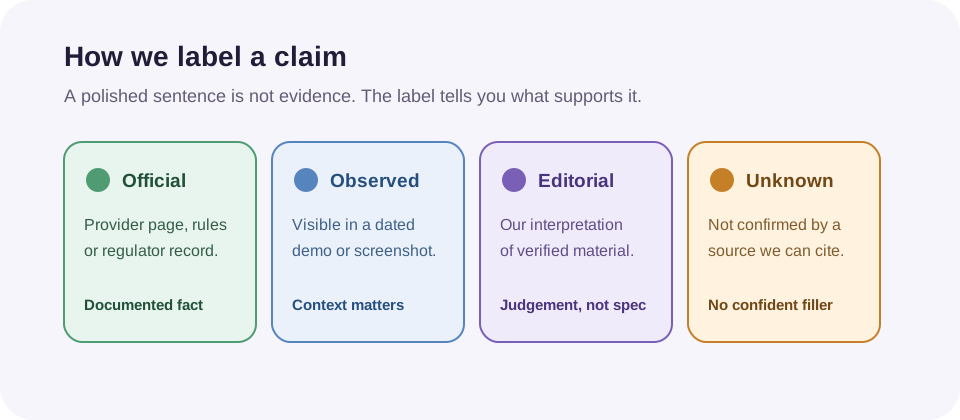
A provider document can support a product fact, while a dated capture supports only the state visible in that frame. No source remains current forever or answers every question.
Official: a first-party statement with a defined scope
“Official” means TaDa Gaming states a game claim, or a relevant Philippine authority addresses a subject within its remit. It is not a blanket seal of truth. The provider page supports the provider identity, five paylines, LOW-MED label, 3+1 structure and published maximum-win claims, but not a casino’s licence or eligibility for a Philippine player. PAGCOR material informs the local age and responsible-gambling context; mentioning it beside the game is not certification.
Observed: visible in a dated first-party state
“Observed” is narrower. A dated screenshot can show that the 3×3 grid and separate fourth reel were visible in that demo version. One screen is not a universal rule and reveals no probability. If 500× appears on the reel, we can report the label; we cannot calculate its frequency or call the arrangement typical.
Editorial: a practical conclusion, clearly owned
Some useful guidance is interpretation rather than a specification. Advising a reader to compare the Bet field before and after enabling an optional mode is an editorial safety step. Explaining that 500× describes a feature multiplier while 12,500× describes the stated maximum win is a conclusion drawn from two official figures. Such conclusions must preserve the source facts without introducing an unsupported probability, recommendation or legal claim.
Unknown: the evidence does not close the question
Unknown is a result, not a blank to fill from memory. RTP remains unknown because no versioned first-party percentage has been verified. The checked material also neither confirms nor rules out Free Spins, Buy Feature and APK availability. “Not found” is not “no,” and values from unrelated websites are not averaged into an answer.
How one claim moves from question to publication
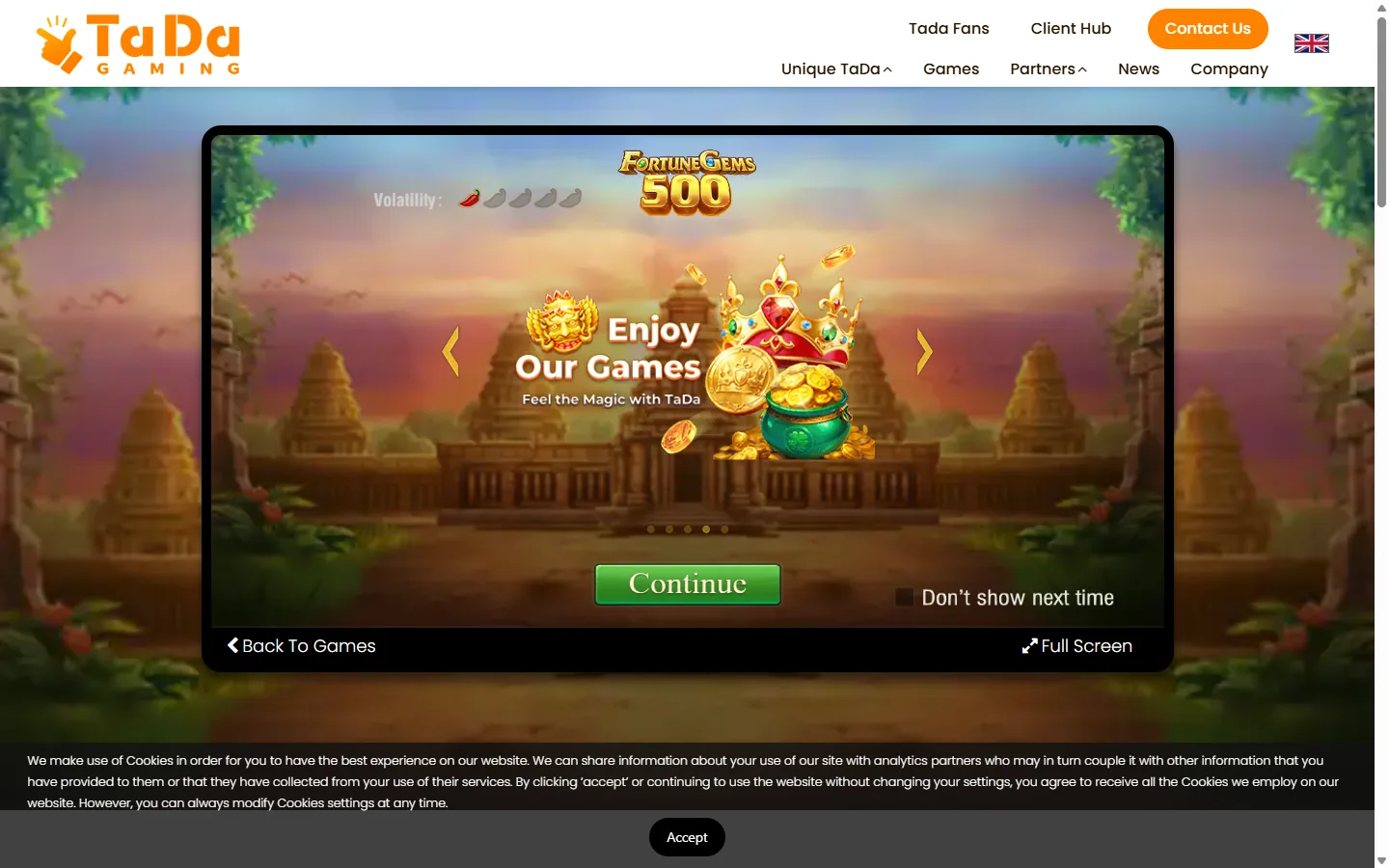
The first-party route is suitable for identity and provider-stated product claims. It is not suitable evidence for casino licensing, RTP or typical outcomes.
The product-page capture shows source matching in practice: it identifies the publisher and the page’s own statements, but its first-party status does not make it relevant to every question.
1. Define the exact question
Broad questions produce vague evidence. “Does the game have a bonus?” is split into specific checks: Is Extra Bet documented? What direction does it change? Is its cost shown? Are Free Spins or a Buy Feature confirmed? This prevents one verified mechanic from being used to imply an entire feature set.
2. Match the source to the claim
Product identity and mechanics are checked first against TaDa Gaming’s game page and release article. Interface wording is checked in the official demo. Philippine responsible-gambling context is checked against current PAGCOR material. An operator’s legal status would require a relevant current regulator record and identified legal entity; provider branding alone would be insufficient. The source register shows this division of labour.
3. Record value, unit, version and date
A number without its unit is unsafe. “12,500×” is recorded as 12,500× total bet, while “500×” belongs to the special-reel multiplier feature. A release date is recorded as 6 August 2025, whereas a page-access date tells readers when the source was checked. For screenshots, the route, viewport, emulation status, state and capture date travel with the observation.
4. Test for conflicts and overreach
Before publication, we check the claim’s outer limit. A compact product label cannot become five physical reels when the detailed description shows a 3×3 grid and special fourth reel. LOW-MED says nothing about frequent wins, and a maximum is not an expected result. If two suitable first-party statements conflict, we record both and narrow the wording until the active rules settle it.
5. Put the qualification beside the claim
Readers should not have to hunt for a caveat in a footer. The RTP answer says “Unknown” immediately. The 500× explanation immediately distinguishes it from the 12,500× total-bet maximum. Browser-emulated images are labelled as emulation in their captions, rather than being described elsewhere as “mobile tested.”
Worked example: the Wild rule

The visible sentence supports the narrow claim that the Wild appears on all reels and substitutes for all symbols. It does not support a payout value, frequency, probability or complete exception list.
The panel gives one complete sentence: the Wild appears on all reels and substitutes for all symbols. We quote it without adding payout values, appearance odds or conditions not shown in the frame. The same rule remains readable at a 390×844 browser-emulated width in the capture register; that supports a reflow observation, not a physical-device test.
What a demo session can and cannot establish
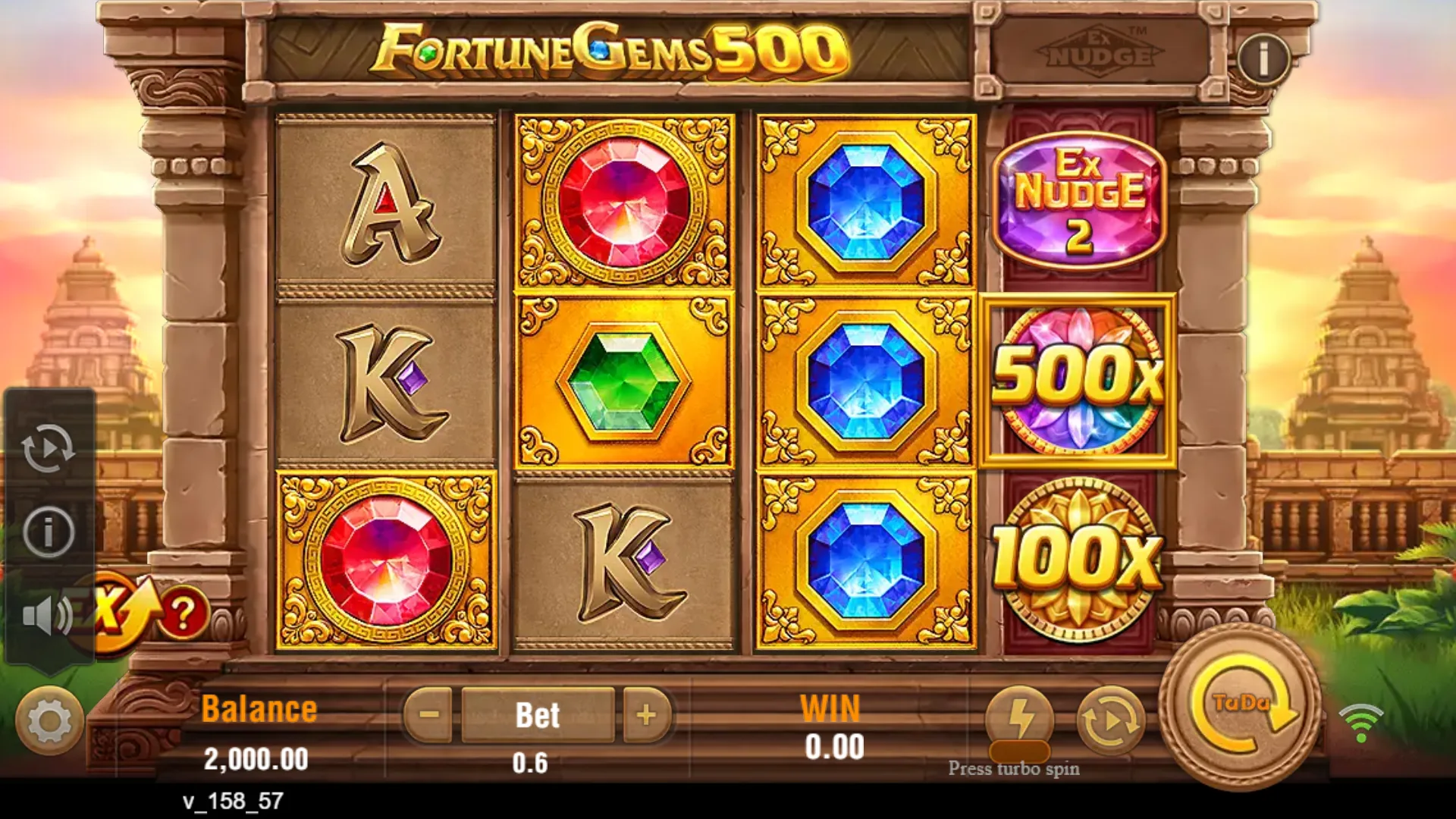
The frame supports observations about visible layout, fields and controls at that moment. It cannot support probability, fairness or a claim about every game version.
The dated main screen is an observation record, not a sample large enough for statistical claims. Its value is that readers can inspect the exact interface state behind the description.
Useful checks
An official demo can confirm that the title loads, identify visible controls, show where the 3×3 grid and fourth reel sit, expose rule text and document a specific interface state. A controlled comparison can be valuable when only one setting changes: for example, an Extra Bet off/on pair could show the displayed cost difference for that captured version.
Claims a demo cannot prove
A short session cannot verify RTP, fairness, hit rate, feature frequency or the chance of reaching 12,500×. Spinning until a desired feature appears illustrates one event; it is not a frequency study. Demo credit is not cash, and access to the provider demo says nothing about whether a named operator is lawful or available in the Philippines.
Device testing boundary
Browser emulation is useful for finding clipping, reflow and readable text at a declared viewport. It does not reproduce every physical handset, browser, network, touch target or thermal condition. Until tests on named physical devices are recorded, the mobile findings stay limited to the emulated setup.
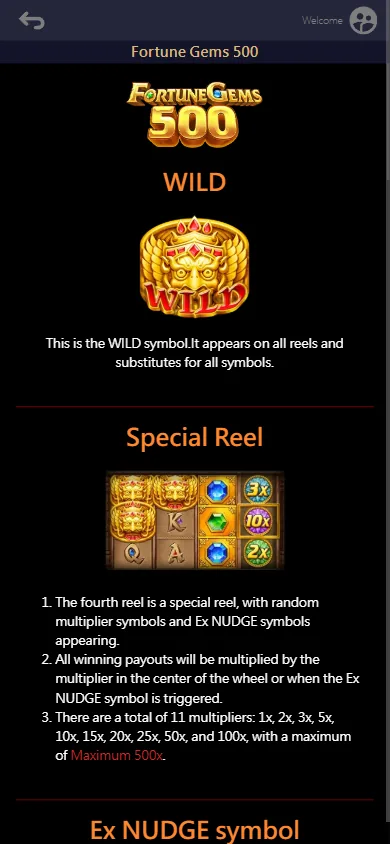
The narrow state can reveal reflow and readable wording at the declared viewport. It is not a physical-device, touch, network or performance test.
The narrow rules frame demonstrates the stated emulation boundary. It supports a layout observation at 390×844, not a claim that the game has passed a handset test.
Corrections, updates and accountability

A focused crop can identify the exact wording under review when its source frame and date are retained. A detached crop without provenance would be inadequate correction evidence.
A useful correction points to exact wording and preserves the route, date and original frame behind any crop. Visual clarity cannot compensate for missing provenance.
When a source changes
We revisit the claim that the changed source actually owns. A newly displayed RTP must be tied to the exact version or configuration before it replaces “Unknown.” A changed rules panel should update the relevant symbols or paytable explanation, followed by concise summaries that repeat the claim. Old screenshots retain their date so they are not silently presented as current.
How a correction is judged
A useful correction identifies the page, disputed wording, proposed value and unit, first-party source, relevant version and check date. We compare it with the registered evidence, then narrow or amend the text when a stronger source warrants it. Because no working contact channel is currently verified, we explain the process without offering a dead form.
Who is accountable today
No named editor has been verified for this publication. The pages therefore speak for the publication and do not invent a biography, credential, test count or personal sign-off. Tools can locate inconsistent numbers, broken links or repeated phrases, but they cannot decide that a source is sufficient or approve an unsupported conclusion. The editorial policy states the commitments that govern those decisions.
The practical test is not whether a sentence sounds confident. It is whether a reader can trace the claim to an appropriate source, understand its limits and know what to verify in the current game before relying on it.