
Fortune Gems 500 Symbols and Wild
One Fortune Gems 500 symbol rule is explicit: Wild appears on all reels and substitutes for all symbols. The available material also names Full Symbol, Multiplier and Nudge / Ex NUDGE. What is missing is a versioned paytable that identifies and prices every standard symbol.
Start with the one explicit symbol rule
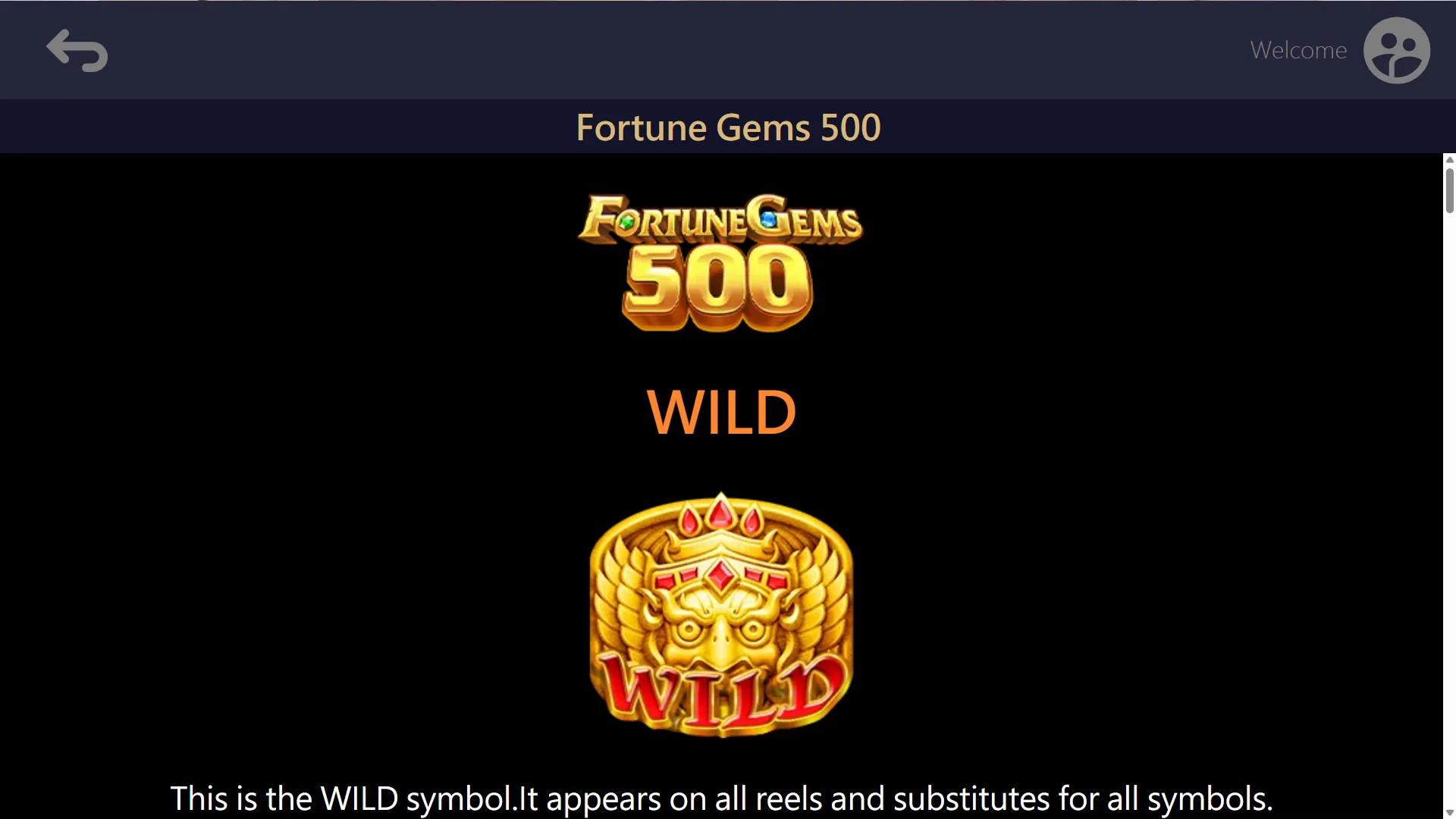
The panel confirms the Wild’s stated role in the captured game version. The panel does not show exclusions, symbol values, line conditions or the complete paytable. It cannot establish symbol values, exceptions or payout priority.
A readable text crop and a narrow emulation preserve the same rule for different inspection needs.

The crop supports precise transcription of the all-reel substitution rule. No exclusion list or payout value is visible, so neither can be added to the rule. It cannot establish a separate Wild award or exclusions.
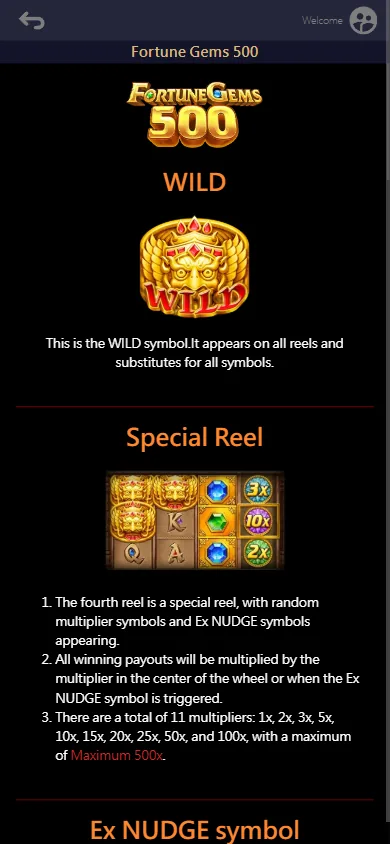
The narrow view checks recognition of the same rule in a different layout. Emulation is layout evidence only, not a physical-handset test or broad browser-support result. It cannot establish physical-device compatibility or additional symbol rules.
Wild is confirmed
The rule is not an inference from the artwork. It is visible in the game’s own help panel, so Wild’s all-reel presence and substitution role are established for the captured version. This corrects any older description that left Wild wholly unresolved.
The rule has a visible edge
The panel gives neither an exclusion list nor symbol values. Keep “substitutes for all symbols” exactly as written; do not add claims about special-symbol priority, trigger replacement or the value of a Wild combination. Payout questions continue in the paytable evidence guide.
Read the field by function
The 3×3 primary field and special fourth reel have different jobs. Standard symbols settle on the main field, while the narrow fourth reel carries named feature and multiplier states. This distinction is more useful than guessing names from decorative art.
Functional recognition without invented values
| Visible group | Documented role | Safe recognition limit |
|---|---|---|
| Wild | Appears on all reels and substitutes for all symbols | Exclusions and values are not shown |
| Standard grid symbols | Populate the 3×3 primary field | Complete names and payouts are not established |
| Full Symbol | Official named mechanic | Eligible symbols, trigger and exact transformation rules remain unresolved |
| Multiplier | Official special-reel mechanic, up to 500× | Displayed value does not reveal frequency or universal application |
| Nudge / Ex NUDGE | Official named special-reel mechanics | Complete movement, collection and settlement rules are not captured |
| Scatter or separate bonus symbol | Not established | Do not assign a conventional role from appearance |
Primary symbols need a source board
A useful atlas needs each icon’s name, role and value from the same game version. The main-screen image supplies context, not a complete key. Naming cropped icons by resemblance would be guesswork, detached from the rules that determine their actual role.
Feature labels are not payout symbols
Ex NUDGE and multiplier values can be seen on the special reel in the captured main screen. Their visibility confirms interface labels, not that every displayed item is active at once. It also does not show whether a label pays independently or modifies a qualifying result from the main field.
The wide crop supplies spatial context; the narrow crop focuses on the separate feature area.
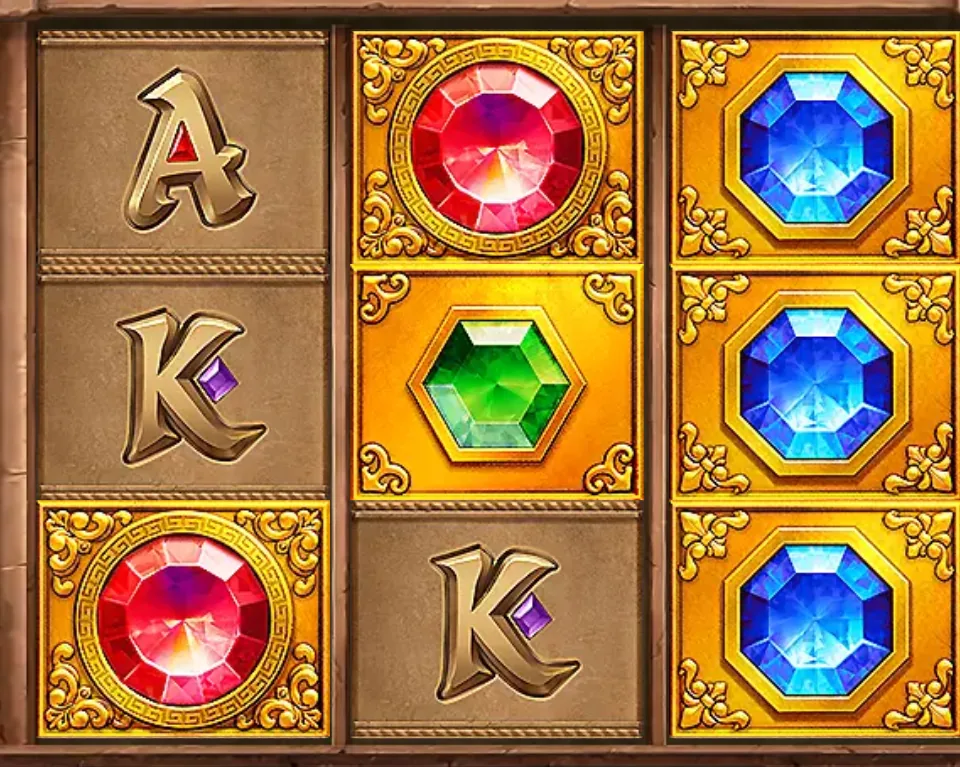
The crop separates standard-grid recognition from special-reel labels. It does not reveal the five line paths, payout values or which displayed states are active. It cannot establish official symbol names, hierarchy or values.

The close view prevents feature labels from being catalogued as ordinary paying symbols. Their presence does not establish triggers, simultaneous activity, probabilities or payout application. It cannot establish activation, frequency or independent payouts.
A source screen and an editorial abstraction help readers separate recognition from assumed value.
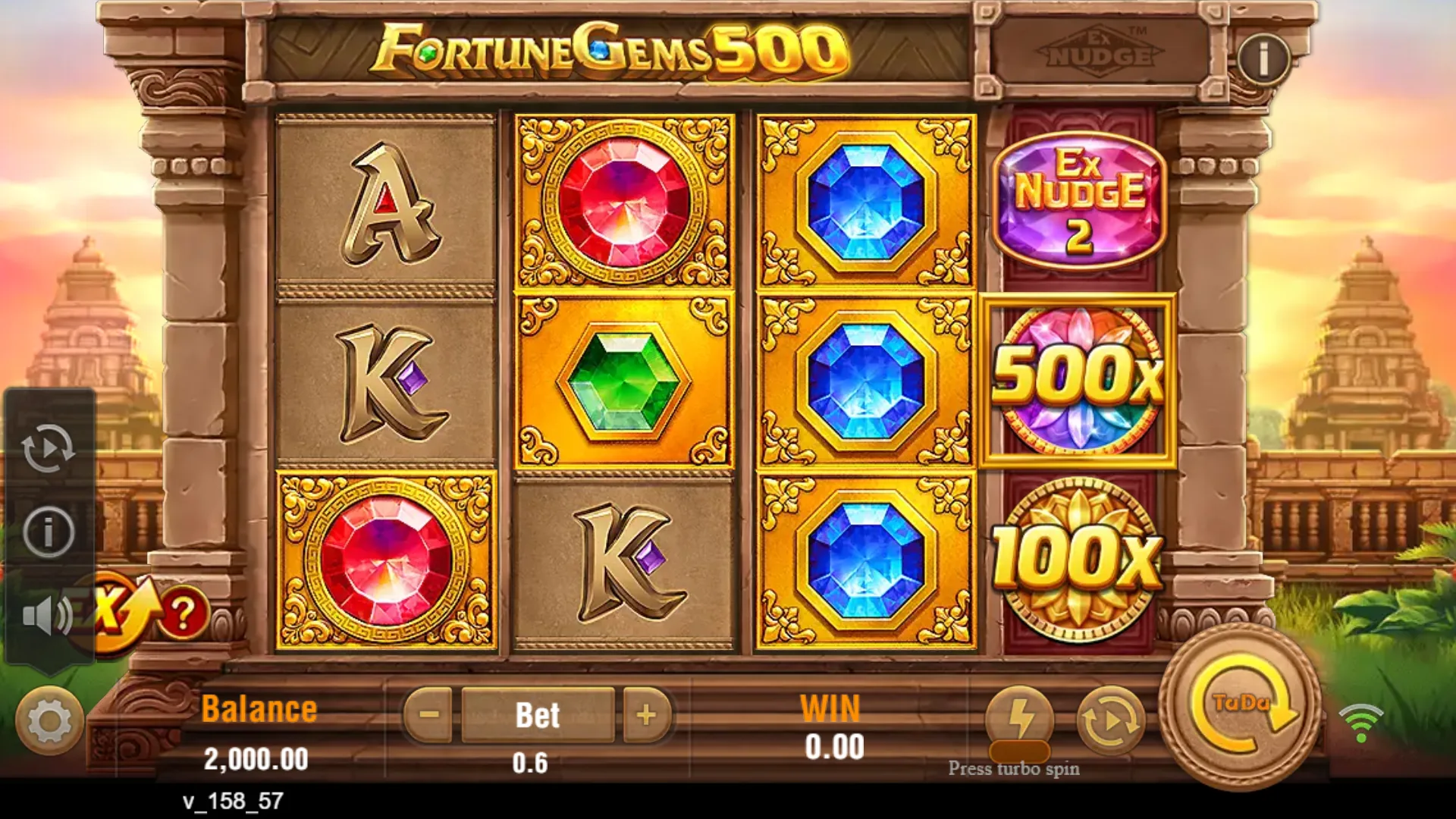
The full screen preserves the artwork and feature area in their original spatial context. One pre-action state cannot establish odds, feature frequency, symbol values or a typical outcome. It cannot establish a complete symbol atlas or qualifying combinations.
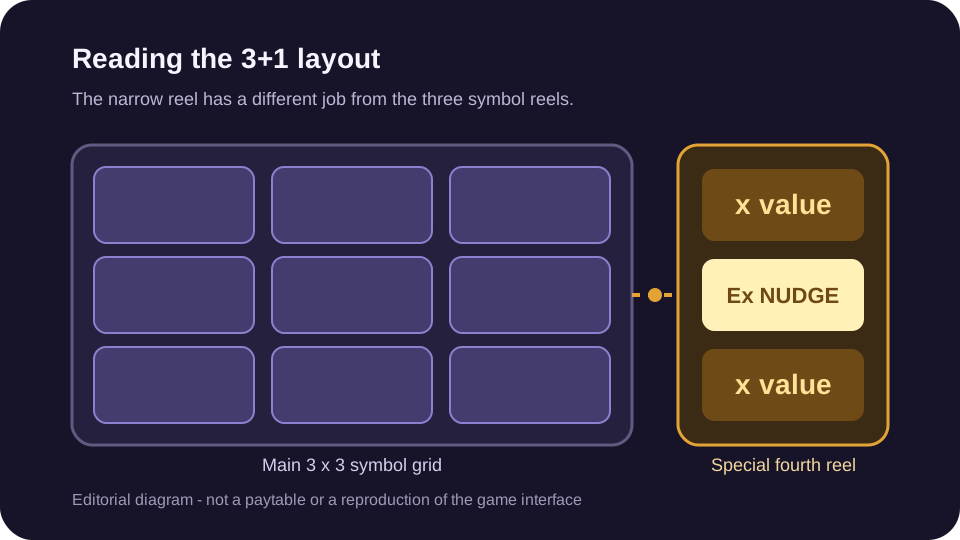
The full capture shows the artwork in context; the diagram isolates the functional zones. Neither visual provides a complete symbol name-and-value atlas.
Recognition before valuation
When the reels stop
First inspect the settled 3×3 arrangement. Then check whether Wild is part of a qualifying pattern under the active five-payline rules. Only after that should the special fourth reel be read for an applicable feature state. This order prevents a prominent multiplier label from being mistaken for a stand-alone award.
When Full Symbol appears
Full Symbol is an official feature name, but the available evidence does not provide its trigger, eligible-symbol list or exact settlement sequence. It should not be paraphrased as “all positions automatically pay”. A dated before-and-after official capture plus the corresponding help text would be needed for that fuller explanation.
When Nudge or Ex NUDGE appears
The names indicate special-reel behaviour, and TaDa Gaming’s product material presents them as part of the feature set. The exact distance, timing, collection logic and award effect cannot be reconstructed from the label alone. A single still can show where Ex NUDGE appears; only continuous state evidence and rules can show what changed.
The quick-tip frame belongs to the recognition sequence because it shows that instruction appears before the main interface. It does not identify or price every symbol, so the active rules remain necessary.
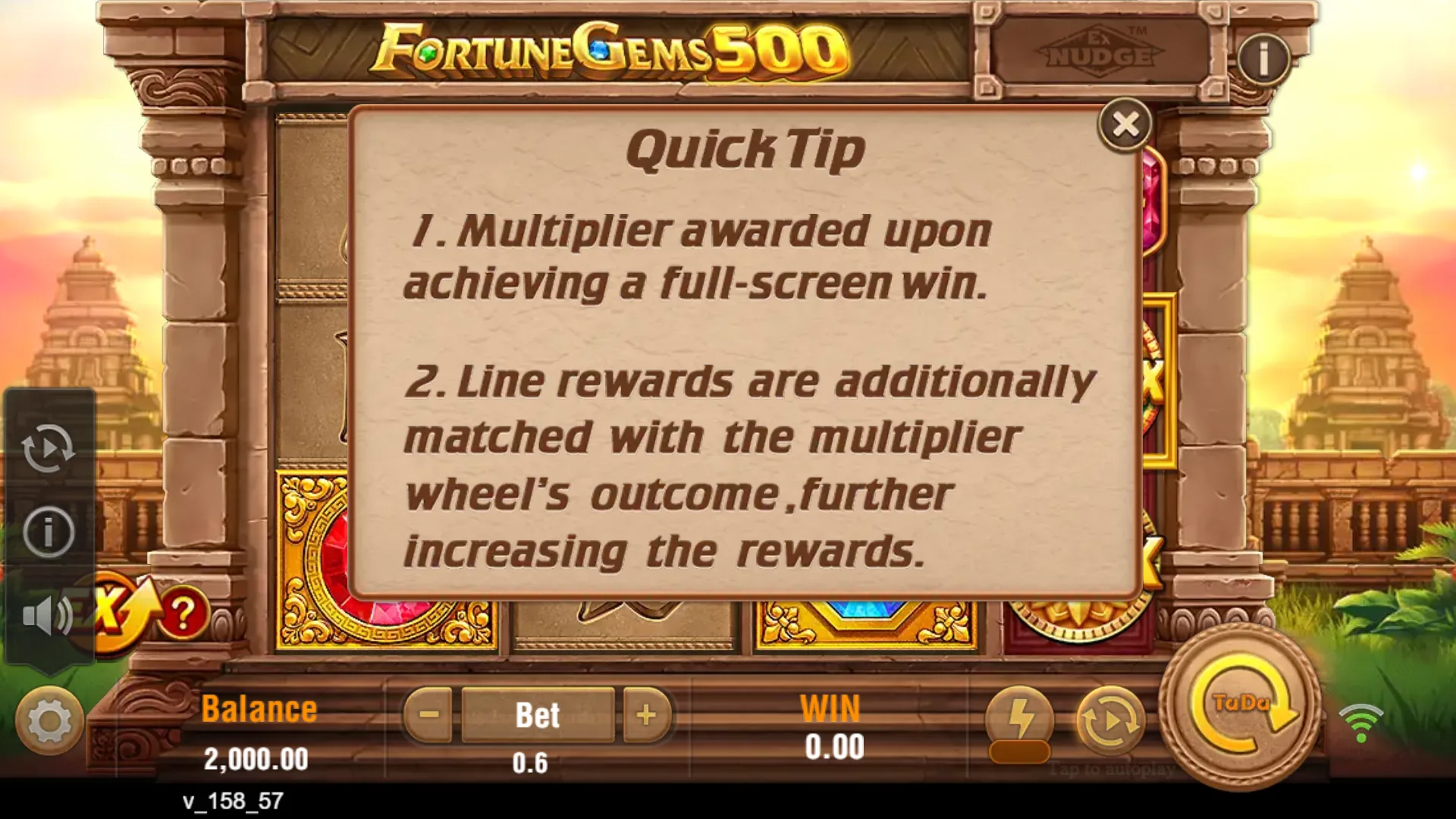
The screen marks an orientation step before symbol recognition begins on the main grid. A quick-tip screen does not supply RTP, paytable values, feature odds or a settled result. It cannot establish symbol names, payouts or feature triggers.
What remains unresolved
The missing symbol information is substantial but specific: official names for every standard icon, values for each qualifying count, payout units, complete five-line geometry, and the interaction rules for the named mechanics. Free Spins and Buy Feature availability are also unresolved, so no Scatter-like icon should be assigned either role without direct rule text.
Why visual familiarity is not enough
Gem, fruit, number or card-like imagery may look conventional, but familiar art does not guarantee a conventional name or value. The same caution applies to colour: a visually premium symbol is not necessarily the highest-paying one. Only the active official paytable can settle hierarchy.
The useful endpoint
Readers can confidently identify the screen’s two functional zones and the Wild’s stated role. They can also recognise Full Symbol, Multiplier and Nudge / Ex NUDGE as official mechanic names. Anything beyond that—especially symbol prices, trigger icons and relative value—should remain unlabelled until a complete source is available.
The annotated controls close the recognition task by separating interface controls from game symbols. That boundary matters when a circular button or status icon might otherwise be mistaken for part of the paytable.
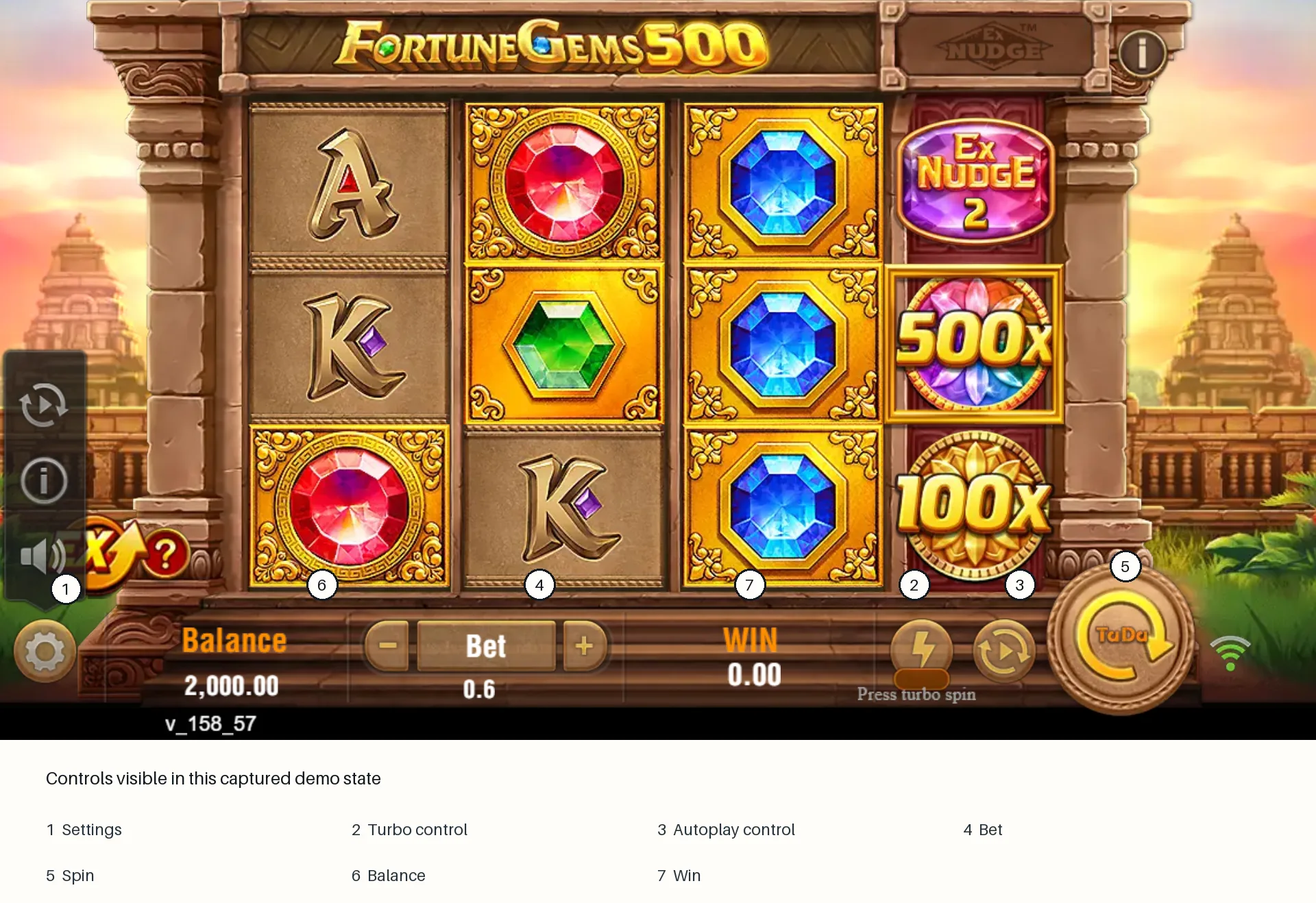
The annotation distinguishes operable interface elements from symbols that participate in game evaluation. Labels identify screen positions; they do not prove defaults, limits or availability in every version. It cannot establish symbol values, feature odds or control defaults.