
Fortune Gems 500 Session Strategy
No system can make the next Fortune Gems 500 result favourable. Timing, screen patterns and larger stakes do not control random outcomes. The practical strategy is to manage cost, pace, Extra Bet exposure and a firm stopping point.
Draw the control line before play
The decisions a player can actually control
| Decision | What it can change | What it cannot change | Practical check |
|---|---|---|---|
| Total stake | Money exposed on one round | Random result quality | Use the lowest comfortable displayed cost |
| Extra Bet | Multiplier filtering and premium-value chance; cost must be checked | A guaranteed premium value or profit | Compare off/on total cost first |
| Spin pace | How quickly money is exposed | Underlying odds | Avoid rushed or automatic play |
| Session length | Number of opportunities to spend | Past results becoming due | Set time and money stops |
| Stop | Prevents additional exposure | Already settled outcomes | Act at the first limit |
Stake changes exposure, not luck
A smaller total bet reduces the amount at risk per round relative to a larger one. It does not make Wild, Full Symbol, Multiplier or Nudge / Ex NUDGE more likely unless an exact rule says so; no such stake-dependent probability rule is established here. The complete bet range is also unknown, so use only the options displayed in the active version.
Pace changes spending speed
Fast play and autoplay turn many separate stakes into a short burst of spending. Slowing down leaves time to read total cost, settled WIN and balance, though it does not improve the maths. Use manual play when autoplay limits or stop conditions are unclear.
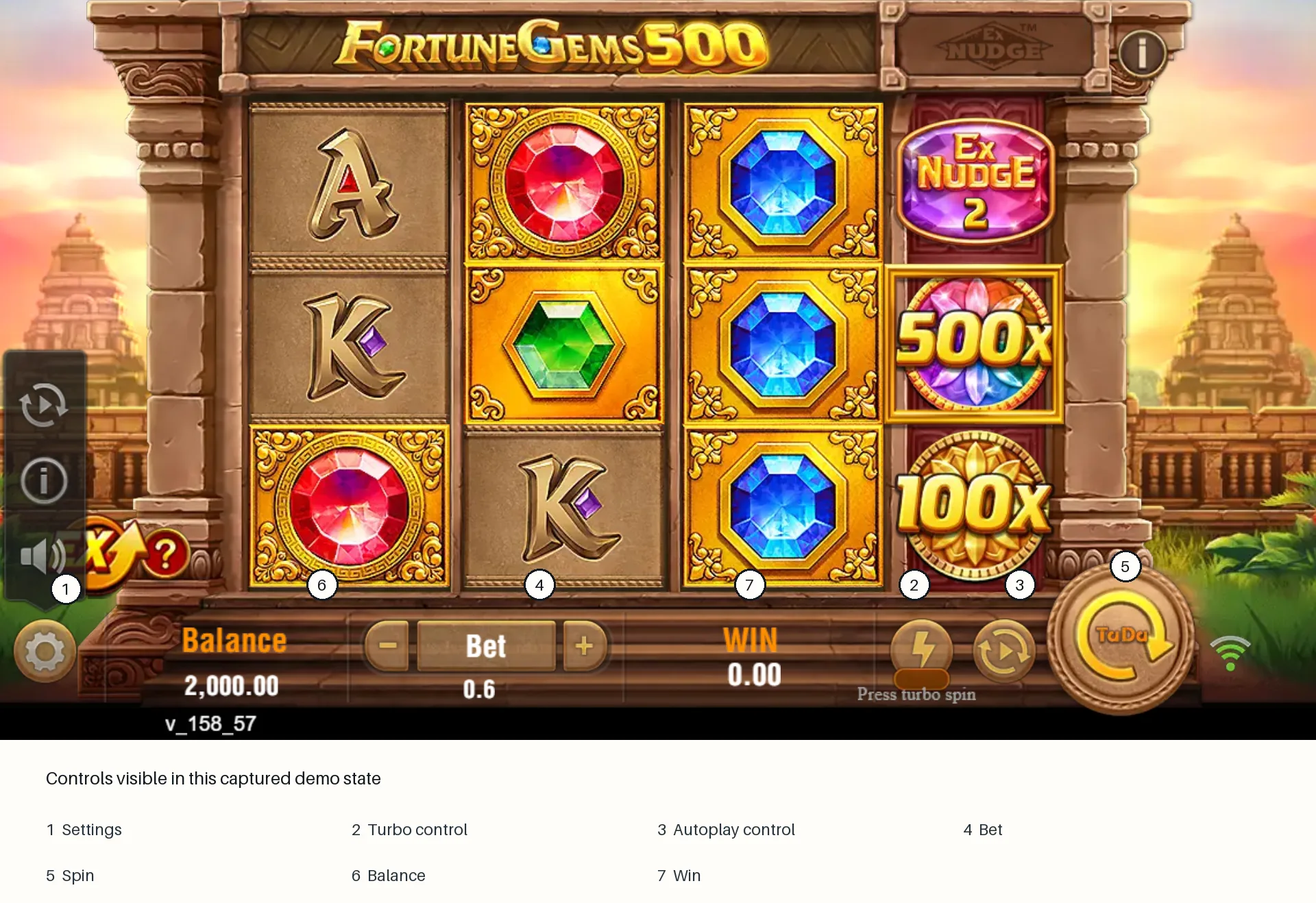
The map focuses strategy on decisions the player can actually make. Labels identify screen positions; they do not prove defaults, limits or availability in every version. It cannot establish better odds, control defaults or a winning system.
Treat Extra Bet as a priced choice
TaDa Gaming states that Extra Bet filters out low multipliers and increases the chance of premium multiplier values. That is the only safe directional claim. The extra cost, exact probability change and revised RTP are not established, so the option cannot be ranked as better value from the available information.
Compare like with like
Before enabling the option, keep every other controllable setting the same and compare the displayed total stake. The difference is the immediate price of the choice for that version. Do not use a cost seen in another operator, currency or screenshot, and do not proceed if the interface hides the new total.
Premium does not mean profitable
A premium multiplier may still apply to a small or non-qualifying base state according to the rules, and it may not appear within a session. Filtering lower values does not remove random loss or guarantee 500×. For the exact feature boundary, read the Extra Bet guide.
The fourth-reel crop shows why premium labels can dominate attention. It should prompt a cost check, not a prediction that a large multiplier will activate.

The close view illustrates the visual cue that must be separated from stake and stop decisions. Their presence does not establish triggers, simultaneous activity, probabilities or payout application. It cannot establish selection, probability or profitability.
Do not turn screen patterns into signals
A losing run creates no debt in the game
The game does not owe a recovery after several losses. Each random result stands on its own, so the next spin need not compensate for the last one. Raising the stake only increases exposure when judgement is already under pressure.
A recent feature does not reveal a cycle
Seeing Ex NUDGE, Full Symbol or a multiplier in the demo does not establish a repeating schedule. One screen state, one event or one short session cannot reveal feature frequency. The official LOW-MED label is a broad category, not a countdown.
Near-misses are not progress
Symbols that appear visually close to an assumed line can feel informative, but exact wins depend on the five official line paths and complete paytable rules, which are not fully captured here. A near alignment has no documented carry-over value for the next round.
The main-screen frame is one frozen arrangement, not a signal about the next spin. It locates the grid, feature reel and settlement fields without implying a pattern.
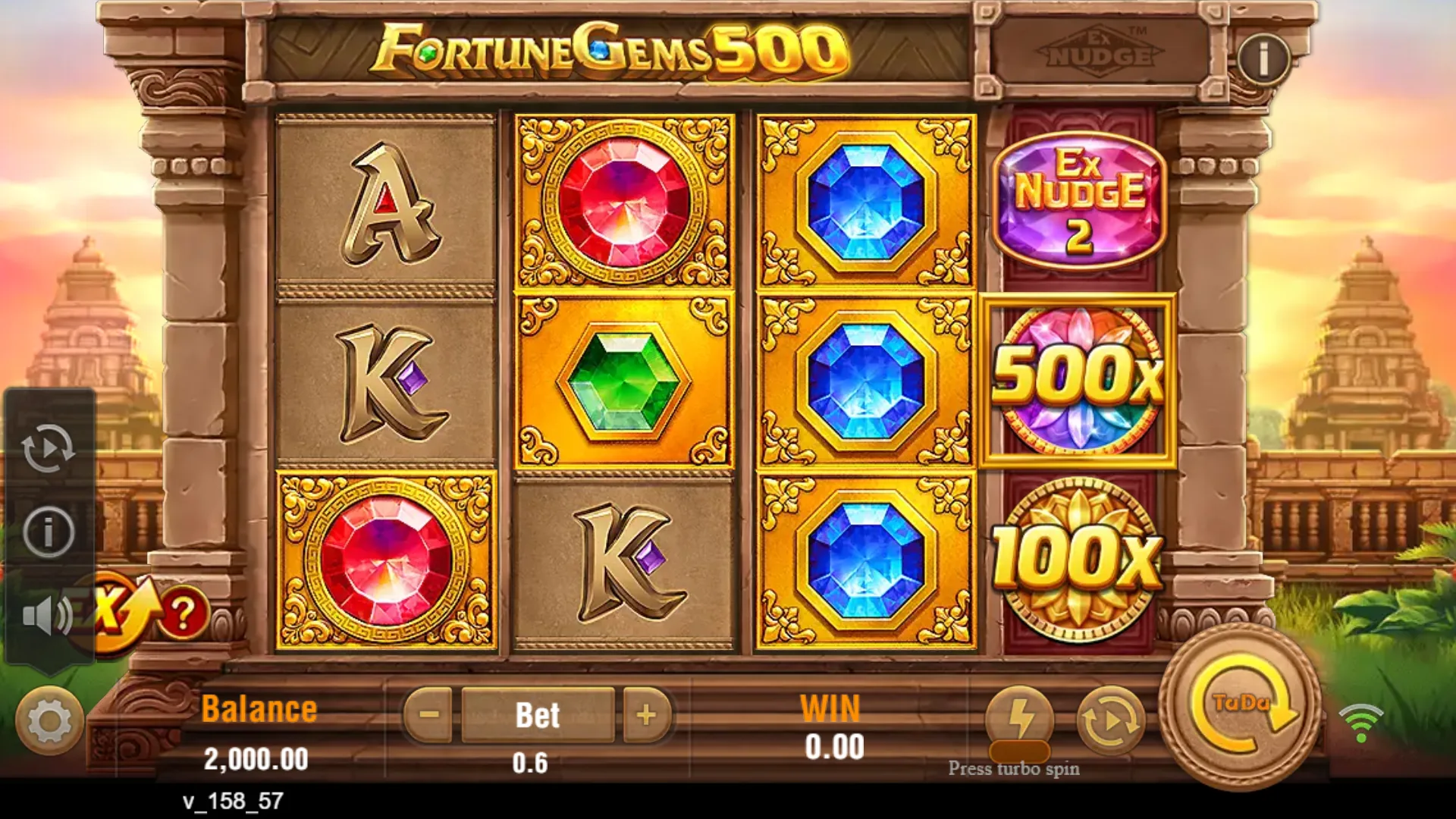
The still demonstrates why a single screen state cannot support pattern-based play. One pre-action state cannot establish odds, feature frequency, symbol values or a typical outcome. It cannot establish cycles, due outcomes or feature frequency.
Keep the maths in its proper place
RTP is currently unknown for the version covered here. If a valid percentage is later found, it would describe long-run theoretical return under a defined configuration, not a personal target. The 12,500× total-bet maximum is likewise a ceiling, not a reason to continue.
LOW-MED is not a promise of smooth play
TaDa Gaming’s volatility label can guide broad expectations, but there is no disclosed hit rate, average win or loss-streak distribution. The risk-label guide explains why a session can feel different from the category without proving the category wrong.
500× is not 12,500×
The special-reel multiplier can reach 500×; the completed game win is capped at 12,500× total bet. Neither number provides a probability, and the first does not guarantee the second. Building a staking plan around either maximum confuses possibility with expectation.
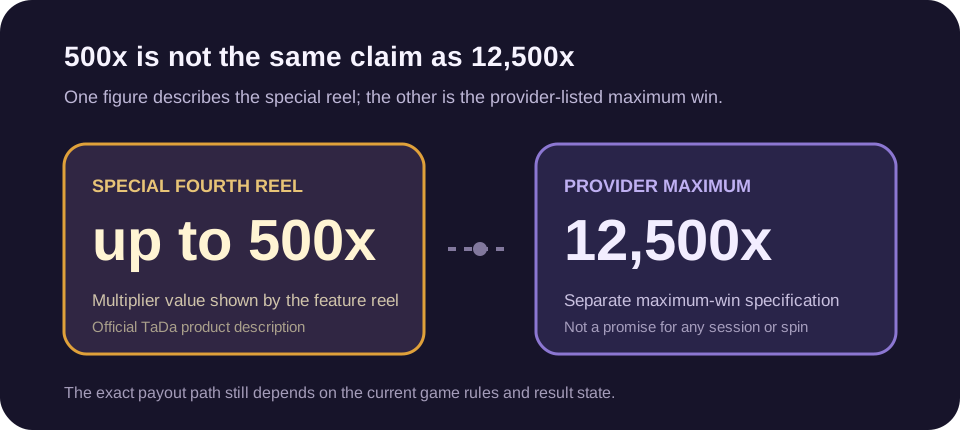
Both numbers are factual ceilings at different stages of the game logic. Neither supplies odds, a route to profit or a recommended stake.
Build a session that can end
Set two limits
Choose a money limit that can be lost without affecting food, housing, bills, debt payments or savings, and set a time limit short enough to keep decisions deliberate. The first limit reached ends the session. Do not treat unsettled hopes or an unseen feature as a reason to extend either one.
Use a pre-spin check
Before each round—or before a small, fixed manual block—read the total bet and Extra Bet state. After animation ends, read WIN and the changed balance. If the numbers are unclear, pause. Tracking by animation, multiplier colour or a remembered starting figure is less reliable than the settled fields.
Remove recovery language
“One more to get even”, “the feature is close” and “the next one should pay” are stop signals, not strategy. Each phrase asks an unknown future result to repair a settled loss. Risking more cannot make the money already lost safer.
One figure locates the fields used for cost and settlement; the other provides a rule fact without implying prediction.

The HUD supports a repeatable pre-spin and post-settlement routine. The captured figures are not a settled-result example and do not establish the available bet range. It cannot establish future results, bet-range limits or value.

The rule crop distinguishes factual game knowledge from predictive claims. No exclusion list or payout value is visible, so neither can be added to the rule. It cannot establish when Wild will appear or what it will pay.
A practical plan for Fortune Gems 500
- Before opening: decide the loss and time limits, and exclude borrowed money.
- At the entry screen: confirm Fortune Gems 500 and TaDa Gaming; a demo does not verify a casino.
- In help: check the active paytable, five line paths, total cost and any displayed RTP. Leave unresolved values unresolved.
- At the controls: keep Extra Bet off unless its added displayed cost is clear and affordable.
- During play: wait for settlement and monitor balance, Bet and WIN rather than feature animation.
- At either limit: close the game without a recovery spin.
When not to start
Do not play while distressed, intoxicated, tired, under financial pressure or trying to solve a debt. Do not begin if identity, rules, total cost or operator status is unclear. Chance-based gambling is for adults aged 21+ in the Philippines, and age eligibility does not make it financially suitable.
When to seek help
If stopping feels difficult, gambling is hidden, money for essentials is used, or chasing has begun, the appropriate strategy is to stop access and seek support—not to optimise the next session. The responsible-gambling guide provides a harm-focused endpoint.
The play gate is the earliest point at which the plan can still be applied without exposure. Confirming identity and limits there is more useful than trying to recover control after rushed play begins.

The entry state provides a deliberate pause for identity, budget and time checks. It does not show a result, confirm operator access or prove how the game performs on a device. It cannot establish operator approval, a safe outcome or future control availability.
The final rule is a stop rule
A good Fortune Gems 500 strategy does not predict Wilds, multipliers or Nudge states. It prevents an uncertain entertainment decision from becoming an unlimited financial one. Stake, pace and optional mode sit on the controllable side; outcomes sit on the random side.
What success looks like
Success is following the pre-set limits and leaving with an accurate understanding of what was spent, regardless of the result. A winning balance does not validate a system, and a losing balance does not create an obligation to continue.
End without bargaining
When the stop point arrives, do not lower the stake to justify more spins or enable Extra Bet for a final attempt. Close the game, record the settled balance if needed, and move away from the screen. The session plan works only when its ending is not renegotiated.