
Fortune Gems 500 Volatility Explained
TaDa Gaming labels Fortune Gems 500 LOW-MED volatility: a broad low-to-medium risk category, not a forecast. It says nothing about when wins will arrive, how large they will be or whether a session will avoid sharp losses.
What LOW-MED establishes
The label comes from the provider’s game information and should be retained exactly rather than converted into an unsupported numerical score. It allows a broad category comparison, yet the supporting distribution is not published in the material available here. There is no verified hit rate, average award, longest expected losing run, bonus frequency or multiplier frequency to attach to it.
What the volatility evidence can and cannot answer
| Question | Supported answer | Boundary |
|---|---|---|
| Official category | LOW-MED | Broad provider label only |
| Hit frequency | Not disclosed | Cannot be inferred from the category |
| Feature frequency | Not disclosed | Named mechanics do not reveal occurrence rates |
| Multiplier range | Feature values up to 500× | Upper value is not a frequency |
| Maximum win | 12,500× total bet | Ceiling is not expected or typical return |
A category rather than a measurement
TaDa Gaming does not publish the line it draws between low and medium, and another provider may classify the same result pattern differently. Use LOW-MED only for broad orientation. It is not enough to call the game “safe”, “steady” or “frequent-paying”.
The statistics still missing
Useful risk statistics would include the frequency and size distribution of settled wins, the frequency of Full Symbol, Multiplier and Nudge / Ex NUDGE states, and the effect of Extra Bet on cost and return. None is established here. A few demo spins would not repair that gap because a short sample is vulnerable to chance and cannot represent the underlying model.
The provider context and the game’s structure answer different parts of the risk question.

The product context anchors LOW-MED as a provider category rather than an editorial score. It is a product presentation, not evidence of RTP, result frequency or Philippine operator availability. It cannot establish hit frequency, loss-streak length or typical awards.
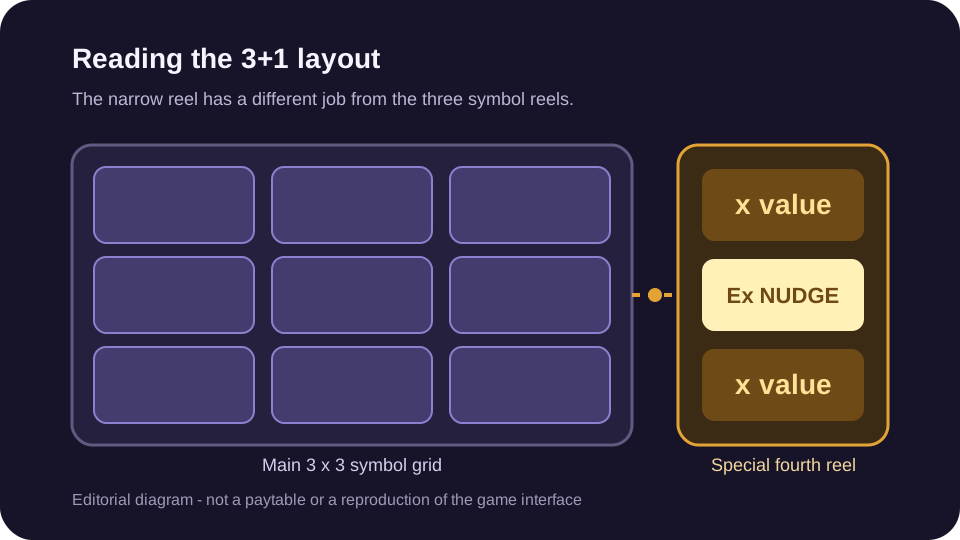
The two-part layout helps explain where feature feedback appears. Screen structure does not reveal volatility statistics or prove how often a state occurs.
Why sessions can feel different from the label
Short runs are noisy
A brief session can feel quiet, lively or unusually feature-heavy regardless of the category printed on the game page. That personal experience describes what happened in a small sample; it does not overturn the label or validate it mathematically. Ten uneventful spins do not make a feature due, just as an early multiplier does not make the game consistently generous.
The RTP percentage is also not currently established. Even if it were known, theoretical return and volatility would still answer separate questions: RTP concerns long-run proportion, while volatility concerns how results are distributed around that long run.
Visible animation is not result frequency
The special fourth reel attracts attention because its labels and movement are visually distinct from the 3×3 field. That prominence can make its events feel more important or more common than the evidence supports. The correct reading order is to wait for the complete animation, then check the settled WIN and balance fields rather than judging risk from motion or sound.
What stands out on screen is not necessarily what happens often. The full pre-action view puts the eye-catching fourth reel beside the quieter settlement fields, but gives no frequency data.
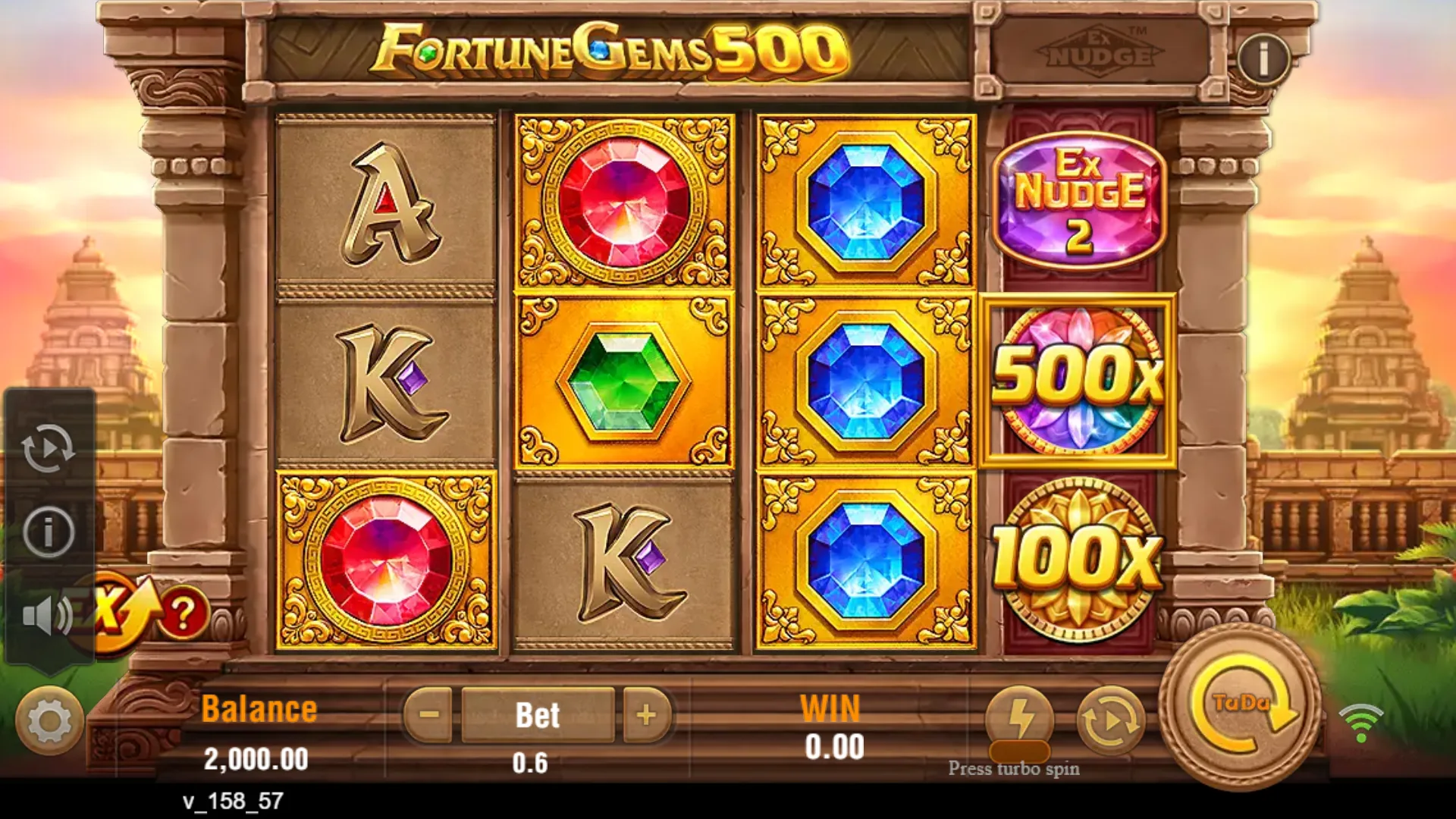
The composition explains why memorable feature feedback can shape perception without measuring the result distribution. One pre-action state cannot establish odds, feature frequency, symbol values or a typical outcome. It cannot establish feature frequency, hit rate or volatility boundaries.
A closer crop isolates the labels that can dominate a player’s attention. It documents the interface, not the frequency or value distribution behind those labels.

The crop clarifies which visible elements may influence a session’s perceived intensity. Their presence does not establish triggers, simultaneous activity, probabilities or payout application. It cannot establish how often any label activates or what it pays.
Extra Bet changes the decision, not certainty
TaDa Gaming says Extra Bet filters out low multipliers and increases the chance of premium multiplier values. This is a directional feature claim, not a full probability table. The additional price, revised RTP and exact probability shift are not established in the available material, so there is no basis for calculating whether the option improves value.
More premium exposure can mean more spend
If Extra Bet raises the displayed cost per round, the immediate and measurable effect is faster exposure at the same number of spins. A player should compare the total shown stake before enabling it, not focus only on the promise of higher multiplier categories. The Extra Bet and feature guide keeps the documented effect separate from the missing cost and odds.
A premium multiplier is still random
Filtering lower values does not guarantee that a premium value will appear on the next spin, within a budget, or at all during a session. Nor does a visible multiplier guarantee a large final award: the primary result, the application rule and the 12,500× total-bet cap all remain relevant.
The control map is useful here because Extra Bet must be treated as an interface and cost decision before it is treated as a feature claim. The image locates controls but cannot supply the missing price or probability shift.
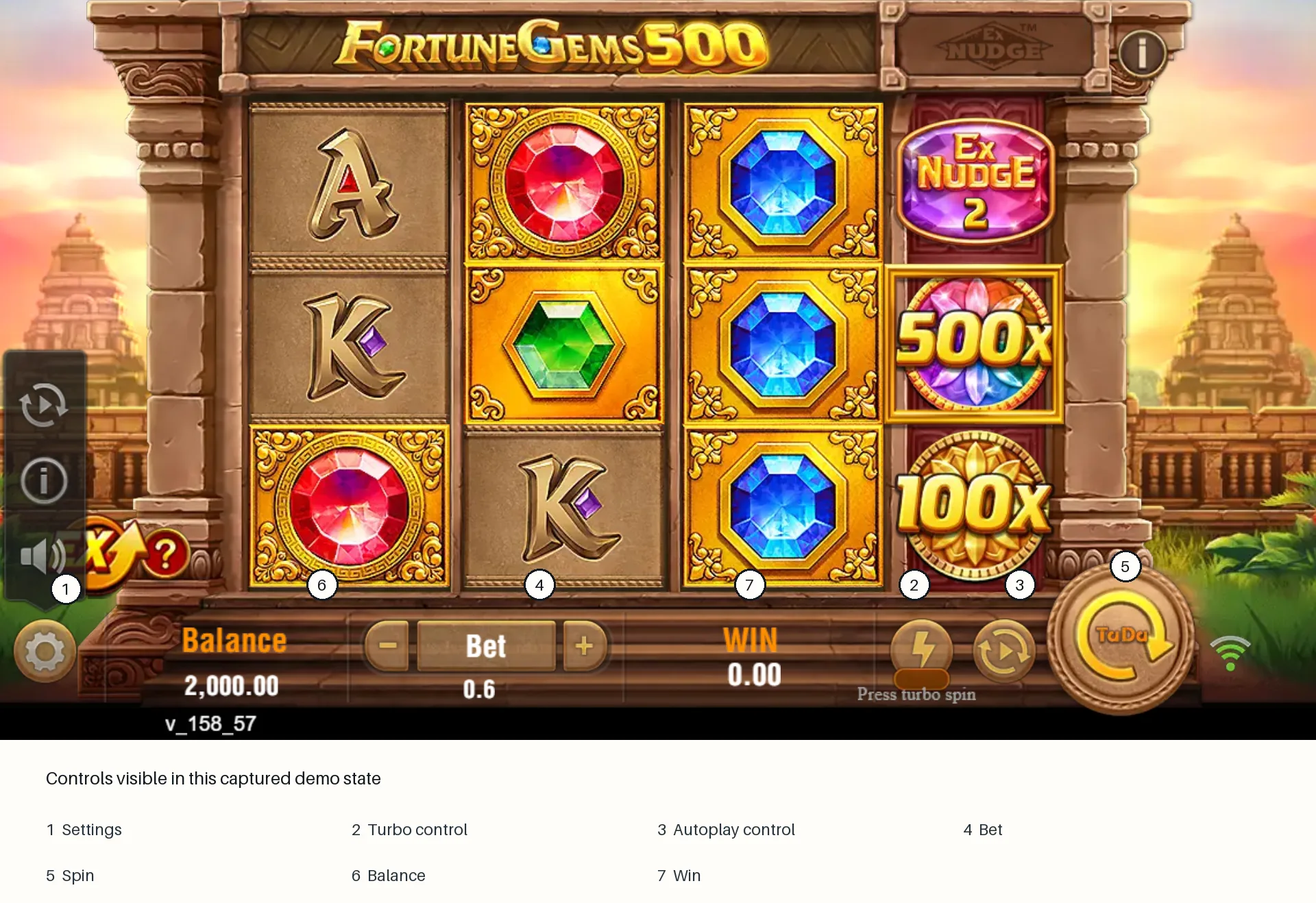
The map keeps controllable pace and stake decisions separate from random result distribution. Labels identify screen positions; they do not prove defaults, limits or availability in every version. It cannot establish Extra Bet cost, revised RTP or premium-multiplier odds.
Use the label in a money decision
LOW-MED is most useful as a reason not to mistake the game for a promise of smooth returns. Before play, decide how much money and time can be lost without affecting essentials. Use the displayed total cost, not a preferred number of spins, to set that limit. A lower stake can reduce money exposed per round; it cannot improve result quality.
Signals to stop
Stop when the planned money or time limit is reached, when Extra Bet cost is unclear, or when play shifts from entertainment to recovering a loss. Changing stake after a poor run does not repair previous outcomes. The decision guide offers a game-specific plan centred on pace, cost and stopping rather than prediction.
The useful conclusion
The strongest supported statement remains modest: Fortune Gems 500 is officially labelled LOW-MED. Use that as a broad category, not as evidence of frequent payouts, short losing stretches or a particular session length. Everything more precise requires probability data that has not been published here.
The HUD reinforces the practical endpoint: read the displayed stake, WIN and changed balance after settlement. Those fields describe one state only and cannot validate or contradict the provider’s broad category.

The fields support disciplined observation of settled session data without turning a short run into a volatility study. The captured figures are not a settled-result example and do not establish the available bet range. It cannot establish the game’s result distribution or expected losing runs.